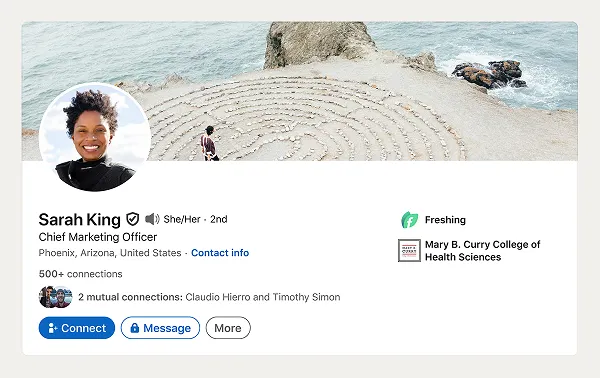
LinkedIn continues to step by step add extra identification qualifiers into its techniques with the intention to restrict scams within the app and fight misrepresentation, nonetheless latest considerations with its verification associate Persona may impression the growth of this course of.
In September, LinkedIn expanded its firm verification choice, which permits companies to verify they’re the official presence of their model. The transfer additionally made office verification a requirement when a member provides or updates a management or recruiter-related function.
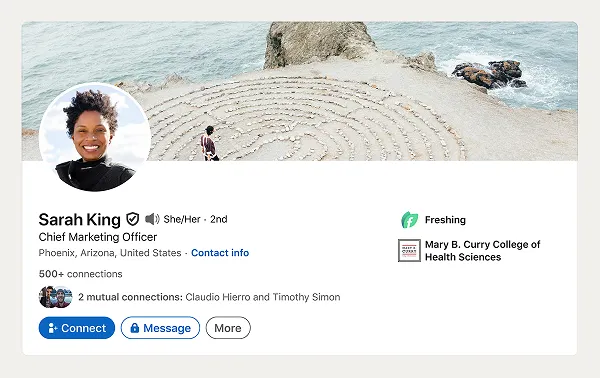
LinkedIn additionally added executive-level job title verification, which means that each one high-level titles, equivalent to govt director, managing director and vice chairman, have to endure verification.
As per LinkedIn: “In case your job title requires verification, you’ll be requested to take action whereas updating your job title and can obtain directions on how you can confirm your office together with your work e mail. If the e-mail you entered isn’t accepted, please double-check that you simply’ve entered the right e mail and that it’s an e mail area owned by your organization. Public domains or private emails aren’t accepted.”
These mixed efforts may assist expose fraudulent recruiters and recruitment scams, whereas additionally addressing a long-standing hole in LinkedIn’s safety that allowed any person to checklist themselves as an worker of any enterprise, with no verification or checking required.
After all, checking each individual’s bonafides could be an enormous enterprise, and one which might not be potential inside LinkedIn’s present techniques. However by having extra checks and balances and making certain that at the least a number of the extra high-level and instantly influential roles require verification, LinkedIn is taking some vital steps to fight scammers and higher shield its members.
Which is why the latest Persona considerations may very well be an enormous blow for the app.
Final week, reviews instructed that Persona, which is a key associate for LinkedIn’s verification program, was sharing customers’ private information with its expanded information companions, in addition to accessing expanded information on customers who search to confirm their data through the platform.
Persona responded to the claims, noting that it has addressed potential vulnerabilities, and confirmed that “no secrets and techniques or buyer information have been uncovered by the highlighted gaps.”
However questions stay as to precisely how Persona utilized private information entrusted to it. If additional points are uncovered, that would see LinkedIn’s ID course of derailed.
It’s an vital focus for LinkedIn, and the corporate is tackling the verification problem thoughtfully, with out overloading its techniques with requests, and with strategic goal in thoughts.
That would play an more and more vital function sooner or later, as an increasing number of synthetic intelligence instruments come into play that might be able to simulate people higher than ever earlier than, which is why the Persona downside may grow to be a a lot larger concern for the app.
(Be aware: SMT requested LinkedIn for a quote on the Persona state of affairs, and the corporate referred to Persona’s assertion, as referenced above.)